
The Senate of the Republic published in the Parliamentary Gazette on February 11 the approved bill for constitutional reform regarding the reduction of the workweek. This bill stems from the reform initiative submitted by the President of the Republic on December 3, 2025. Although it represents significant progress, the final text is still pending approval by the Chamber of Deputies, and therefore its content may be subject to modification during the legislative process.
The proposal approved by the Senators is grounded in international instruments that recognize the right to work under fair and satisfactory conditions, as well as the right to a reasonable limitation on working hours. In this context, the need to balance work activity with adequate and restorative rest is emphasized. According to data from the Organisation for Economic Co-operation and Development (OECD), 27% of workers in Mexico work 50 hours or more per week.
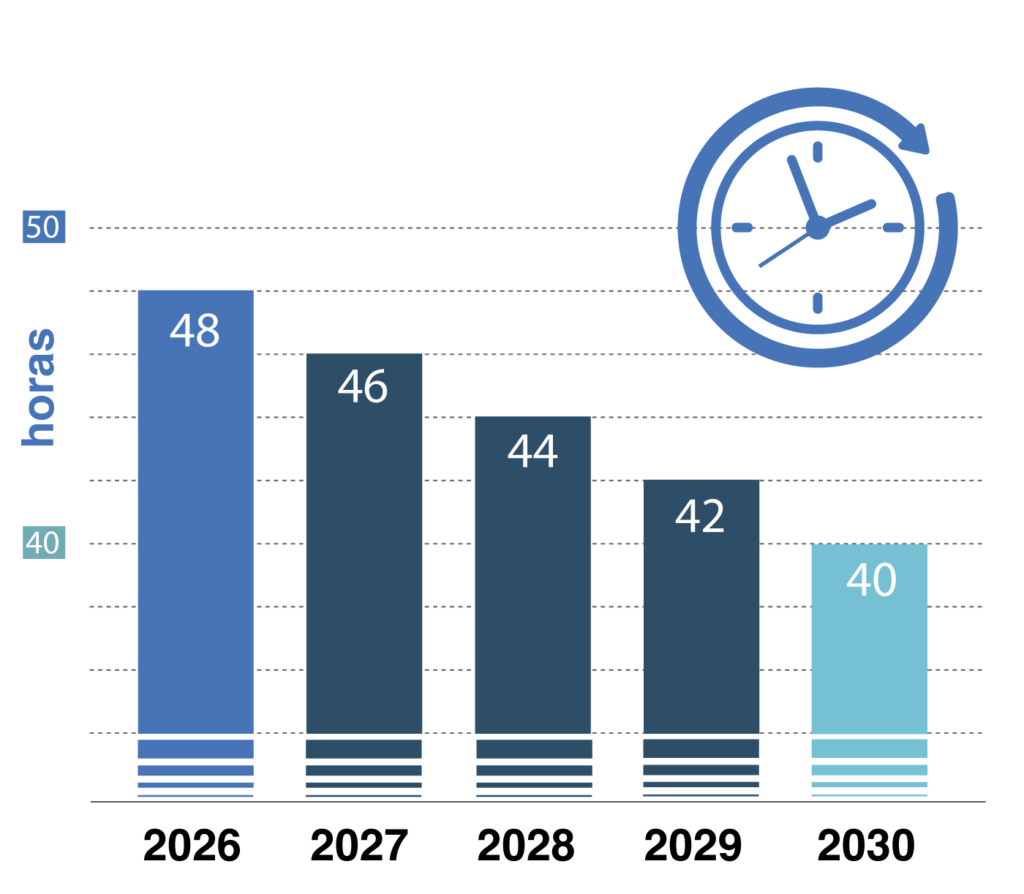
In light of this situation, the proposed constitutional reform provides for the progressive reduction of the weekly work schedule to 40 hours, with the goal of achieving this no later than 2030, to read as follows:
- The workweek shall be 40 hours, as established by law.
- For every six days worked, employees must enjoy at least one day of rest with full pay.
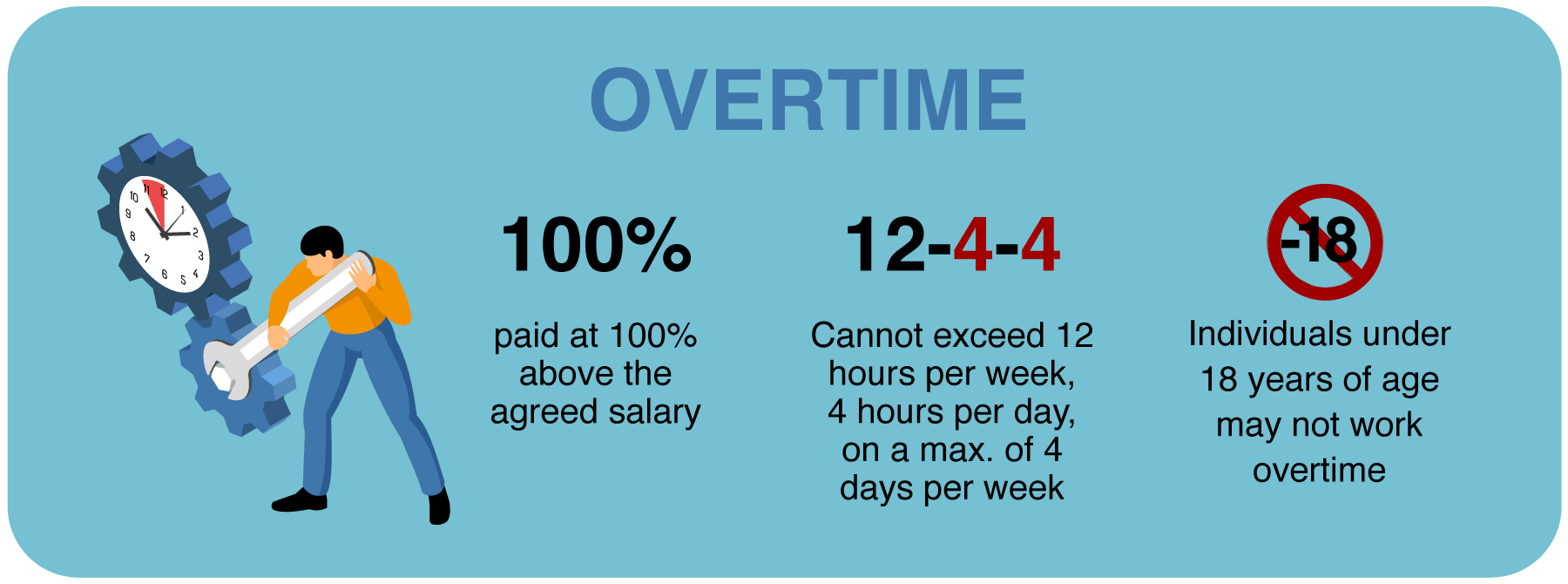
- Overtime must be paid at 100% above the agreed salary for regular hours.
- Overtime may not exceed 12 hours per week, nor 4 hours per day, on a maximum of 4 days within that period.
- Individuals under 18 years of age may not work overtime.
The proposed reform provides that, within 90 days following its publication in the Official Gazette of the Federation (DOF), Congress must make the necessary amendments to the Federal Labor Law (LFT) to align it with the new constitutional text. The head of the Ministry of Labor and Social Welfare and certain members of Congress have stated in interviews and press conferences that the amendments to the LFT will include technical details and specific regulations regarding the calculation of actual hours worked.
Implementation would be gradual, according to a schedule beginning on January 1 of the corresponding year.
It is important to note that the transitory articles do not establish that the implementation of overtime provisions must be gradual or proportional to the reduction of the workweek. Therefore, in principle, the increase in permitted overtime would take effect upon publication in the DOF.
This bill has generated various reactions, particularly within the labor sector, where there had been expectations that reducing the workweek would also establish two mandatory weekly rest days, which ultimately was not included. Authorities have stated that the constitutional text only provides for the right to “at least” one day of rest, without preventing the parties from agreeing to more favorable arrangements. Nevertheless, it will be necessary to await the content of the reform to the Federal Labor Law to understand the practical scope of this provision.
At MGGL, we will keep you informed of the final content of the constitutional reform once it is published, as well as legislative developments related to the reform of the Federal Labor Law.