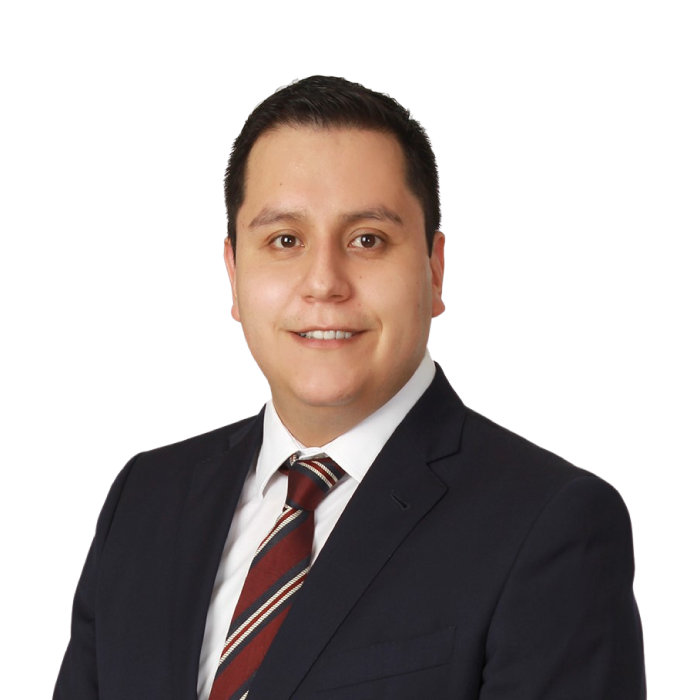
MGGL Anuncia la Promoción de Paulina Mendietta y Luis Flores Archundia a Socios de la Firma

Marván, González Graf y González Larrazolo (MGGL), firma líder en México en Derecho Laboral y del Empleo, anuncia la promoción de Paulina Mendietta y Luis Flores Archundia como socios de la firma, efectiva a partir del 1 de enero de 2026.

Estas promociones reflejan el compromiso sostenido de MGGL con el desarrollo de talento interno y la consolidación de trayectorias profesionales construidas sobre la excelencia técnica, la cercanía con el cliente y una visión estratégica del Derecho del Trabajo. En años recientes, la firma ha fortalecido su estructura de socios mediante promociones internas, como las de Genaro Pérez Velázquez en 2022 y Oscar Bojorge en 2024, reafirmando una cultura institucional orientada al crecimiento desde dentro.

Paulina Mendietta es una consultora especializada en materia laboral, con una práctica enfocada en los aspectos laborales de transacciones corporativas y comerciales, inicio de operaciones, reestructuras empresariales, reducciones de personal y transferencias de empleados. Su trabajo se ha distinguido por un enfoque preventivo del litigio laboral, mediante el diseño y mejora de políticas internas, capacitación en recursos humanos, auditorías laborales y evaluaciones de relaciones de trabajo. Asimismo, cuenta con amplia experiencia en la conducción de investigaciones internas por denuncias de acoso y otras faltas éticas en el entorno laboral. Como reconocimiento a su destacada trayectoria, Paulina fue galardonada como Rising Star of the Year  en los Legal500 Mexico Awards 2023, consolidándose como una de las abogadas laborales con mayor proyección en el mercado mexicano.

Por su parte, Luis Flores Archundia cuenta con más de 10 años de experiencia en Derecho del Trabajo, con un enfoque especializado en relaciones laborales individuales y colectivas para clientes de los sectores bancario, financiero, de seguros y de servicios. Ha participado en proyectos de alta complejidad, incluyendo transferencias de más de mil empleados y procesos de fusión empresarial, aportando soluciones prácticas y estratégicas en contextos corporativos exigentes. Luis Abraham se integró a MGGL en 2014 y ha sido una pieza clave en el desarrollo de asuntos laborales de gran escala.

En MGGL creemos firmemente en construir el liderazgo de la firma desde adentro. Las promociones de Paulina y Luis Abraham son el reflejo de una trayectoria profesional sólida, del compromiso con nuestros clientes y de una forma de ejercer el Derecho del Trabajo que combina rigor técnico, criterio práctico y valores institucionales,” señaló Héctor González Graf, socio director de MGGL.

Con estas promociones, MGGL alcanza un total de nueve socios, consolidándose como la firma más grande y líder en México especializada exclusivamente en Derecho Laboral y del Empleo. Este crecimiento fortalece su capacidad para asesorar a clientes nacionales e internacionales en asuntos laborales complejos, con un enfoque integral y altamente especializado. La firma reitera su compromiso con el desarrollo de talento, la diversidad y la excelencia profesional, pilares fundamentales de su posicionamiento y crecimiento continuo en el mercado legal mexicano.

Acerca de MGGL

Marván, González Graf y González Larrazolo, S. C., es una firma jurídica con más de 75 años de experiencia, especializada en asesoría y litigio laboral para el sector empresarial, conformada por más de 100 abogados y estudiantes de derecho. Nuestra asesoría y gestión se caracteriza por su sentido empresarial, atendiendo a las necesidades operativas y estratégicas de cada cliente. La Firma ha invertido fuertemente en la formación de sus abogados y en software de vanguardia para el manejo eficiente y efectivo de los casos. El equipo legal ha demostrado ser un socio estratégico para nuestros clientes en la realización de sus planes de crecimiento y desarrollo, transformando las amenazas en oportunidades. Después de años de crecimiento sostenido, MGGL es ampliamente considerada como líder del mercado en México.

Paulina Mendietta: https://www.mggl.com.mx/eng/portfolio/paulina-mendietta/

Luis Flores Archundia: https://www.mggl.com.mx/eng/portfolio/luis-abraham-flores-archundia/

MGGL AWARDED AS BEST LABOR AND EMPLOYMENT LAW FIRM OF THE YEAR IN MEXICO 2025

On June 8, a reform to the General Law to Prevent, Punish and Eradicate Crimes in Connection With Human Trafficking and for the Protection and Assistance to Victims went into effect, as of which working hours that exceed, on a permanent basis, the limits established in the Federal Labor Law will be considered as labor exploitation and may be sanctioned with imprisonment and fines.

Continue reading

¿EXISTE PRÓRROGA PARA EL PROCESO DE LEGITIMACIÓN?

Como hemos informado anteriormente, está por concluir el plazo para la legitimación de Contratos Colectivos de Trabajo (CCT), a la fecha han sido legitimados únicamente 12,641 CCT. En torno al plazo otorgado para la legitimación, han circulado noticias que aseguran la extensión de este periodo.

Sin embargo, con fecha 6 de marzo de 2023, se publicó el acuerdo que aclara las condiciones en que operará el plazo para el registro y desahogo de los procedimientos de legitimación de CCT existentes. En dicho acuerdo, la Junta de Gobierno del Centro Federal de Conciliación y Registro Laboral aclaró que no existirá prórroga para la solicitud de legitimaciones de CCT, lo cual confirma que la fecha de vencimiento será el próximo 30 de abril de 2023. En consecuencia, todos los CCT que no hayan sido registrados para su legitimación en la plataforma del Centro de Conciliación y Registro Laboral se darán por terminados en la fecha mencionada.

Considerando lo anterior, la extensión señalada al 31 de julio de 2023 aplica al plazo para el desahogo de las consultas (votaciones) que se hubieran registrado antes del 1 de mayo de este año para efectos de legitimación de CCT, atendiendo a que durante la pandemia por covid-19 fueron suspendidas las mismas.

SENATE APPROVES INCREASED VACATION TIME FOR WORKERS IN MEXICO: SOME CONSIDERATIONS

On December 14, 2022, the Plenary Session of the Senate unanimously approved the draft bill to amend Articles 76 and 78 of the Federal Labor Law, presented by the Chamber of Deputies, regarding vacation time. The ruling is now passed to the Executive for its publication in the Official Gazette of the Federation. It will become effective on January 1st, 2023.

As mentioned in our previous newsletter, this reform is justified as our country was falling behind in terms of paid time off, and official vacation periods had not been revised since the enactment of the Federal Labor Law in 1970.

Aunque algunas iniciativas propuestas por senadores de diferentes grupos parlamentarios contemplaron esquemas de vacaciones con un mayor número de días, el dictamen aprobado se centró en el derecho a vacaciones pagadas. El texto reformado es el siguiente: 

Article 76. - Workers with more than one year of service shall enjoy an annual period of paid vacation, which in no case may be less than twelve working days, and which shall increase by two working days, until reaching twenty, for each subsequent year of service. 

As from the sixth year, the vacation period shall increase by two days for every five years of service. 

Article 78. -Of the total period corresponding in accordance with the provisions of Article 76 of this Law, the employee shall enjoy at least twelve days of continuous vacation. Said period, at the discretion of the worker, may be distributed in the manner and time so required. 

” 

For clarity, the new vacation scheme would look as follows: 

Years workedVacation days
112
214
316
418
520
6 a 1022
11 a 1524
16 a 2026
*The increase continues at the rate of 2 days for every 5 years of service. 

In regard to the table above, although it is in the same terms as it was included in the various draft bills, from some points of view there could be a contradiction between the approved legal text and the way in which the new scheme was established. Considering that the reform states that the starting point is twelve days, increasing by two until reaching twenty and that from the sixth year onwards, two days will be increased every five years, this could lead to the interpretation that the period from the sixth to the ninth year is twenty days and that, until the tenth year, after the five-year period has elapsed, there would be a right to twenty-two days.

Another issue that generated controversy was whether the vacation period should be enjoyed continuously. The considerations of the approved bill point out that the reform seeks to guarantee and grant certainty to the employees, as well as paid time off according to their needs, but also recognizing that there are activities that cannot be substituted due to the degree of specialization of the work required. Therefore, although continuous vacation periods should be granted in general terms, the legal text allows the parties to agree on the time and form of distribution of vacation days, either continuously or partially.

Regarding the entry in force of the new provisions, vacation days already accrued and still pending to be taken will not be affected by this change. However, as of January 1st, 2023, when employees reach their anniversary, they will be entitled to a vacation period under the new scheme. 

LEGISLATIVE PROPOSAL FOR LONGER VACATION PERIODS FOR MEXICAN WORKERS

On September 27, 2022, the senators that make up the Labor and Social Welfare Commission unanimously approved the Opinion to amend Articles 76 and 78 of the Federal Labor Law, presented by the United Commissions of Labor and Social Welfare and Legislative Studies, regarding vacations. Before its official approval, this opinion must be subject to review by the Chamber of Deputies.

The Opinion takes up the initiatives proposed by senators of different parliamentary groups. Although some initiatives contemplated vacation schemes with a greater number of days, and some even proposed a reduction of the working day, the approved Opinion only extends the right to paid vacations, to be as follows:

YEARS WORKED NUMBER OF DAYS OFF (PTO)
112
214
316
418
520
6 a 1022
11 a 1524
16 a 2026
*The increase continues at the rate of 2 days for every 5 years of service.

The reform establishes that workers must continuously enjoy at least 12 days of vacation. This reform is justified on the basis of our country's lag in terms of holidays, since, when compared to other countries with a similar level of development to ours, Mexico is one of the countries with the lowest level of vacation periods around the world. For example, in Brazil and Panama, the legal standard is 30 days of vacation as of the first year, while the average in the region is almost 15 days.

The proposed Opinion points out that the World Health Organisation (WHO) estimates that in Mexico 75% of the workforce suffers from work-related stress, which puts us in a global first place, above the world's leading economies, such as China (73%) or the United States (59%). In this regard, it should be noted that specialists in the field have pointed out that short holiday periods have an impact on workers' stress levels, as well as being related to other ailments, such as chronic exhaustion (burnout).

Although everything seems to indicate that this reform will be approved in the short term, there is no certain date for it to be published in the Official Gazette, given the current legislative process. Employers' chambers have requested that the implementation of the reform be gradual so as not to harm small and medium-sized enterprises and to allow them to make the necessary projections and adjustments to comply with the new standard.

This change will have an operational and economic impact in companies, and will ultimately benefit them by increased employee satisfaction.

To read the full article, download the PDF here .

COMPLETION OF THE FINAL STAGE OF MEXICO’S LABOUR LAW REFORM

As a result of the May 2019 Labour Law Reform, the new model was implemented in each of the country's states in stages, facing delays mainly due to budgetary problems and the challenges of coordination between the state and federal levels. On 3 October 2022, however, the third and final stage of its implementation was completed. As of that date, the authorities that will attend new labour disputes in all federal entities of the Republic will be the Conciliation and Registration Centres and the Labour Courts.

With this implementation, the Conciliation and Arbitration Boards have ceased to see claims and any other requests related to new procedures, including out-of-court settlements, being in charge only of the processing and resolution of lawsuits that were previously filed before this authority.

As we have previously reported, the new procedure implies a mandatory pre-judicial conciliation before the Conciliation Centres as a condition for filing a lawsuit before the Labour Courts, except for those alleging discrimination or pregnancy, among others exceptions provided in the Law. The appearance of the employer is also compulsory, and the authority can impose fines in case of failure to appear, so we envisage that conciliation will play an important role in dispute resolution.

Contrary to the procedure followed before the Conciliation and Arbitration Boards, the stages of the new procedure are in writing, with the exception of the preliminary and trial hearings.

The procedure before the Labour Courts implies new challenges for the defence of the cases, as the new regulations impact procedural terms and the burden of proof for the parties. This will also be reflected in new forms of administration of the employment relationship, from its inception to its termination.

Notwithstanding the challenges that a transformation of this scale implies, this change has generated the expectation of having greater legal certainty and shorter times in the resolution of conflicts, which, in the experience of the first two stages, have been resolved within the procedural terms established by law. In the states where the new procedure was previously initiated, disputes have been resolved on average within a timespan of 6.1 months.

With this third stage, Mexico is closer to fulfilling its commitments under T-MEC, the free trade agreement between Canada, Mexico, and the United States. What remains pending in this regard is the deadline for the legitimisation of collective bargaining agreements, which, like the implementation of the new labour justice model, has faced operational challenges.

To read the full article, download the PDF here .

THE IMPLEMENTATION OF MEXICO’S LABOR LAW REFORM ONE YEAR BEFORE TAKING FULL EFFECT

As of the May 1, 2019 reform to its Federal Labor Law, Mexico is implementing substantial changes in the administration of labor justice. These changes must be complied with within the deadlines established in accordance with the legal transition set forth in the reform.

This note summarizes in the most succinct manner (a) the scope of the reform; (b) the progress of the implementation and (c) the perspective and expected development in the short term of the same, considering the factors that make up the transition, the results achieved since the start of the reform and reflections on the possible scenarios that may arise going forward.

Scope of the Reform

The way the reform was conceived and implemented implied a radical change in the country's legal culture and management of collective labor and employment relations. While the administration of labor justice was historically considered as an instrument to achieve social balance, in this new stage it has evolved to provide a more technical and expeditious procedure led by the judiciary.

With this reform, the paradigm of the jurisdictional processes has changed, now imposing an obligation on workers and employers to submit to a conciliation hearing as a requirement before filing a lawsuit.

For such purposes, the reform included the entry into operation of state conciliation centers, as well as one on federal level, which also has the responsibility of administering the registry of unions and collective bargaining agreements at the national level.

With respect to collective labor relations, the new model is built on the power of representation through the active participation of workers. Under the new scheme, workers must vote personally, freely, directly and by secret ballot to approve the collective bargaining agreements in force in their workplace.

The reform also imposed an obligation on the unions to legitimize the collective bargaining agreements entered into, a regulation that needs to be complied with within 4 years after the entry into force of the reform. Considering that new authorities had to be created and put into operation, in parallel within the 4-year term, the system has experienced certain challenges of legal interpretation, as well as setbacks of an economic, operational, and structural nature, which were exacerbated by the health emergency.

To read the full article, download the PDF here .

SOBRE LA CONCILIACIÓN EN MATERIA LABORAL

La palabra conciliación ha estado por muchos años en la denominación de la autoridad encargada de dirimir las controversias entre el capital y el trabajo y, de acuerdo con el concepto propuesto por la Organización Internacional del Trabajo, la conciliación es una práctica consistente en utilizar “un mecanismo por el cual se asiste a las partes en conflicto, mediante la intervención de un tercero neutral, a fin de que alcancen una solución”. (Disposiciones sustantivas de la legislación del trabajo: Resolución de conflictos colectivos de trabajo.  Guía sobre legislación del trabajo, OIT).

La conciliación se vislumbraba formalmente como una etapa del procedimiento y se ha asemejado más a la mediación, implicando que la autoridad interviniera con el objeto de que las partes en conflicto dialoguen. Por el contrario, con la reforma laboral el conciliador debe participar activamente en la solución del conflicto, estableciendo estrategias de negociación encaminadas a encontrar una solución.

En 2012 se intentó involucrar más a la conciliación, adicionando la figura del funcionario conciliador e imponiendo a las Juntas la obligación de promover que las partes resuelvan los conflictos mediante la conciliación.

Con la reforma a la Constitución de 2017 y a la Ley Federal del Trabajo de 2019, se dio un cambio en el paradigma de la función conciliatoria en el nuevo sistema de justicia laboral, se determinó la existencia de la conciliación prejudicial obligatoria, con diversas excepciones como en casos de discriminación en el empleo y ocupación por embarazo, así como por razones de sexo, orientación sexual, raza, religión, origen étnico, condición social o acoso u hostigamiento sexual.

La conciliación prejudicial impone la obligación a trabajadores y empleadores de someterse a una audiencia conciliadora antes de comenzar un juicio, imponiendo multas para el caso de inasistencia por parte del patrón.

La función conciliatoria está a cargo de Centros de Conciliación locales y a nivel federal a cargo del Centro Federal de Conciliación y Registro Laboral que es un organismo descentralizado, ubicando a la conciliación prejudicial en la materialización del derecho fundamental de acceso a la justicia en sede administrativa.

Con lo anterior, el acceso a la justicia no sólo está bajo un aspecto jurisdiccional, sino también, a través de un procedimiento alterno para la solución de las controversias laborales, con el objetivo de obtener mayores acuerdos entre trabajadores y empleadores previo a tramitar un juicio.

Puedes leer el volumen completo de la revista here.


Por José Genaro Pérez.